Translation, recording, and finished video, handled by a single Arabic-language studio.
Industry Arabic produces Arabic voiceover for clients localizing video content into Arabic, including documentaries, corporate training, museum exhibits, e-learning, and marketing materials. We handle script translation, casting, recording, audio editing, and final video assembly through a single workflow.
We cover Modern Standard Arabic and regional dialects (Egyptian, Levantine, Gulf, Maghrebi), plus voiceover in French, Spanish, Persian, and Kurdish for clients with multilingual deliverables.
Have a project in mind? Get a free quote now.
Our Approach
Arabic is at the center of what we do. Voiceover sits within a full-spectrum Arabic language team, and every voiceover project draws on that broader linguistic and cultural expertise.
- Every stage is led by Arabic linguists. Translation, casting, recording direction, and final QA are overseen by people who bring expertise in the Arabic language along with technical skills. Pronunciation, register, MSA-vs-colloquial choices, and dialect consistency are decided by a fully bilingual Arabic/English team.
- Script adaptation is built in. Arabic recorded narration typically runs 15–25% longer than the equivalent English. We adapt the script to your video’s timing during translation, rather than discovering the problem in the recording booth. Where the source script needs to change, we flag it for your sign-off before recording.
- Dialect range and cultural fluency. Modern Standard Arabic for documentary, news, education, and pan-Arab content. Regional dialects (Egyptian, Levantine, Gulf, Maghrebi) for audience-specific work. Our team spans the Arab world, and we cast and direct to match the regional and cultural register your audience expects.
Our Voiceover Services
Documentary and broadcast translation
Long-form narration in Modern Standard Arabic or a regional dialect, matched to the source video’s pacing and tone. Suitable for broadcasters localizing English programming for Arab markets, or producers releasing Arabic content into English-language markets.
Museum and exhibition content
Gallery audio guides, exhibition films, and interpretive content for cultural institutions and the exhibition design firms that produce them. Includes consistent terminology across audio, text panels, and printed material.
E-learning translated from English
Course narration that fits within Articulate Storyline, Captivate, or similar timing constraints. We adapt the script for Arabic timing constraints, record, and sync back to the source course. We can also Arabize any on-screen animations.
Corporate training videos
Onboarding, compliance, safety, and operations content for organizations with Arabic-speaking staff in the Gulf and wider region. Includes on-screen text localization and final video delivery.
Marketing and explainer videos
Short-form narration in Modern Standard Arabic or the dialect that matches your audience. We’ll help you decide which.
The Workflow
- Script and source review. We review your English script alongside the video, flag timing issues before recording, and propose script edits where needed.
- Translation by a subject-specialist linguist. Legal content goes to legal linguists, cultural content to specialists in that field, not to a generalist pool.
- Script adaptation for timing. Arabic tends to run longer than English. We trim and rephrase the script to fit the video’s existing timing without losing meaning, flagging any significant changes for your approval.
- Casting. We propose voice talent based on the project’s specifications, not from a fixed catalog.
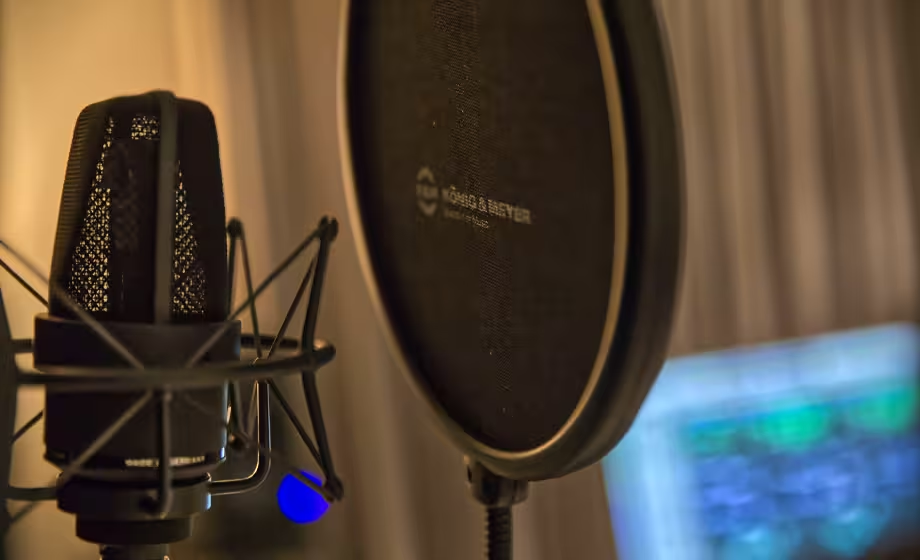
- Recording, directed by an Arabic linguist. Performances are coached in real time, not just recorded and shipped.
- Audio editing and sync. Levels normalized, breaths cleaned, segments timed to the video.
- Video editing and on-screen text localization. If your source video has English text, lower thirds, or captions, we localize them in Arabic and rebuild the edit.
- Delivery in your preferred format and codec.
Languages and dialects we cover
- Arabic. Modern Standard Arabic for documentary, news, education, and most corporate content. Regional dialects for marketing, drama, and audience-specific work (Egyptian, Levantine, Gulf, and Maghrebi).
- Other languages. We also handle voiceover in French, Spanish, Persian (Farsi), and Kurdish for clients with multilingual deliverables. If you’re producing in Arabic and parallel languages, we can run the whole package through one studio.
How We Cast
We don’t maintain a large fixed roster of voice actors and try to fit every project into it. We cast to the project. When a project comes in, we propose voice talent specifically matched to the dialect, register, age, gender, and tone the project needs, drawn from a vetted network of Arabic voice talent we’ve worked with directly or auditioned for past work.
Voice samples
Below are samples of two of our MSA voice talents:
[Placeholder: Female MSA narrator]
[Placeholder: Male MSA narrator]
If you’d like to hear samples matched to your project’s specifications, we can put together a short casting reel.
Past Projects
- Smithsonian Training Videos: Arabic and Sorani Kurdish voiceover for a series of Smithsonian Institution training videos on architectural site preservation and the care of museum collections, used in trainings the Smithsonian conducted for archaeologists and museologists in Iraq. Our team translated the scripts, recorded the voiceover in the studio, and lip-synced it to the on-screen speakers in post-production.
- Security Sector Videos: Arabic, French, and Spanish voiceover for a series of animated videos commissioned for the security sector. Keeping the narration in sync with the animations required script adaptation during translation, timed performance from the voice artists, and sync work in post-production.
- Marketing Videos: Arabic script translation and voiceover for a series of marketing videos promoting a Gulf-based tourism and entertainment company. The English scripts required a creative rewrite, both to synchronize with the visuals and to work as effective marketing copy for Arabic-speaking audiences. The finished videos ran on social media and local television.
- Pharmaceutical Videos for Health Care Practitioners: A series of explainer videos combining marketing copy with technical medical content. We adapted the script and voiceover to sync with mechanism-of-action animations, and coordinated with the client’s pharmaceutical and legal teams across multiple rounds of review to ensure compliance with local drug advertising regulations.
Frequently Asked Questions
Why does Arabic voiceover require script adaptation, not just translation?
Recorded Arabic narration typically runs 15–25% longer than the equivalent English. A word-for-word translation will overrun your video’s timing. We trim and rephrase the translated script to fit, flagging meaningful changes for client approval before recording.
Should I use MSA or dialect for my project?
Most documentary, educational, corporate, and pan-Arab content uses Modern Standard Arabic. Marketing aimed at a specific national audience, dramatic work, and informal content typically use a regional dialect. We’ll be happy to provide our own recommendation based on your target audience.
Can you work from a script we’ve already had translated?
Yes. We’ll review the existing translation before recording and flag anything that needs adjustment for timing or accuracy. Several of our voiceover projects have come from clients whose previous vendor’s translation didn’t time out correctly in the booth.
Do you handle just the voiceover, or the whole video?
Either. We can deliver an audio file for your editor to use, or we can deliver a finished Arabic-language video with on-screen text localized and timing adjusted.
What about AI voiceover?
We use human voice talent. AI Arabic narration has improved, but it still has known weaknesses in correct vocalization of MSA, dialect accuracy, emotional range, and fine-tuning intonation for specific content types. For work where any of that matters, human recording remains the standard.
What’s the turnaround?
A typical 5–10 minute corporate or educational video runs 5–10 business days end-to-end. Documentaries and longer projects scale from there. Rush options are also available.
Request a Quote
Have a project in mind?
Get in touch through our quote request form or email us directly at translations@industryarabic.com, and you’ll hear back within 25 minutes.
We’ll review your project, prepare a price quote and timeline, share several voice samples, and flag any issues that might need your input before we proceed.